
Reliable communications give enterprises a competitive advantage by keeping teams connected and operations running smoothly.
For CFOs and procurement officers, addressing communication system issues through resilient infrastructure helps protect revenue, support compliance, and strengthen customer confidence.
Research from the Information Technology Intelligence Consulting (ITIC) found that a single hour of unplanned downtime costs over $300,000 for 90% of mid-size and large enterprises.
Investing in VoIP failover and redundancy helps organizations strengthen business continuity and maintain reliable communications.
This article explains how these technologies work together and how your organization can build a more resilient communication environment.
What are Failover Systems and Network Redundancy?
These two terms often appear together, but they describe distinct mechanisms that share a common purpose: keeping communications running when something goes wrong.
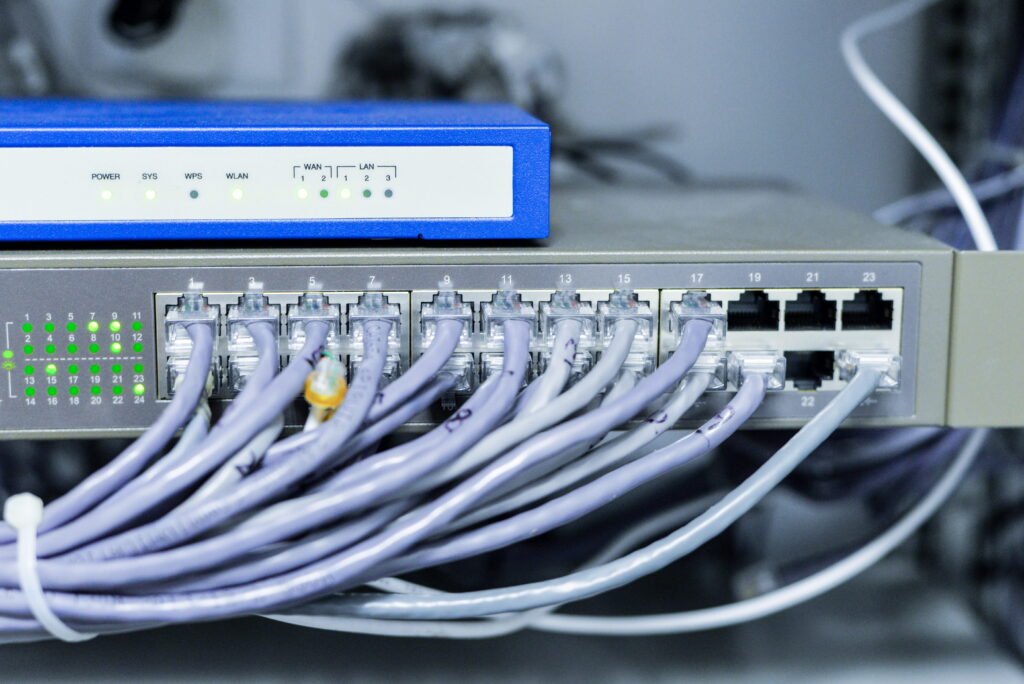
A failover system is an automatic backup mechanism that activates when a primary system fails or becomes unavailable.
In business communications, this means that if your primary phone system, internet connection, or VoIP gateway goes offline, a secondary system takes over within seconds with minimal disruption to ongoing calls or operations. The transition happens in the background, undetected by callers and agents.
Network redundancy provides backup network paths and infrastructure to maintain connectivity. Traffic is automatically rerouted whenever a primary connection becomes unavailable.
Together, failover and redundancy form the structural foundation of a resilient business communication system.
How Failover Systems and Network Redundancy Work Together
Redundancy creates the backup infrastructure. Failover activates it. The two work together by design.
Imagine your organization uses a cloud-based communication platform. Under normal conditions, calls are routed through a primary data center. If that data center becomes unavailable, a VoIP failover system automatically reroutes traffic to a secondary carrier or data center, allowing your teams to continue making and receiving calls without manual intervention.
This kind of automatic rerouting depends on hardware engineered for exactly that purpose. Ribbon Communications Session Border Controllers (SBCs) manage the flow of VoIP traffic between networks, enforce security policies, and ensure failover transitions happen cleanly when primary paths go down.
For enterprises running high-volume communications, SBCs are a critical part of any resilience architecture.
Redundancy also applies across multiple infrastructure layers simultaneously, covering power supplies, network switches, internet service providers, and data centers.
When failover is configured across all those layers, your communications can absorb disruptions at several points without a single failure escalating into a total outage.
10 Best Practices for Building a Resilient Communication System
Building VoIP failover and redundancy into your communications environment is not a one-time deployment. It requires deliberate planning and ongoing maintenance. These practices form the foundation of an effective resilience strategy.
1. Map Your Critical Communication Paths
Critical communication channels vary by industry. Hospitals rely on emergency call systems, while banks depend on customer service lines and secure transaction channels.
Identifying these critical paths helps prioritize investments in redundancy and reduce single points of failure.
2. Distribute Infrastructure Geographically
Redundant systems offer limited protection when they share a physical location with primary infrastructure. A localized power outage, natural disaster, or ISP failure can take both systems offline at once. Distributing infrastructure across multiple sites adds protection against location-specific disruptions.
3. Test Failover Systems on a Regular Schedule
A failover configuration that has never been tested is an assumption, not a guarantee. Regular scheduled tests confirm that switchovers happen correctly and within acceptable timeframes, and surface configuration errors before they become operational problems.
4. Integrate Failover Into Your Business Continuity Framework
Communication resilience functions best as part of a broader business continuity plan rather than as a standalone IT initiative. Embedding your VoIP failover architecture within that framework ensures communication continuity connects directly to your organization’s wider risk management approach.
5. Work with Trusted Providers Who Can Manage Redundancy
Organizations without large in-house IT teams can still access enterprise-grade communications resilience through a managed provider, without the burden of maintaining complex redundant systems internally.
Kital’s Cloud PBX solutions come with built-in redundancy, high availability, and dedicated expert support, so businesses spend less time managing infrastructure and more time staying connected.
6. Implement Multi-Carrier Redundancy
Relying on a single ISP or carrier is itself a single point of failure. Contracting with multiple carriers ensures that if one provider experiences an outage or routing issue, your communications can route through an alternative path without interruption.
For VoIP deployments, this means maintaining SIP trunking agreements with multiple carriers.
7. Set up Real-Time Monitoring and Alerting
The best time to address a communications issue is before it becomes one. Real-time monitoring tools track network health, call quality, and system availability at all hours, sending alerts the moment something looks off. This early visibility tightens response times and limits how long any disruption can affect your operations.

8. Document Your Failover Procedures
The automated switchover happens on its own, but that doesn’t mean your team has nothing to do. Documented failover procedures make it clear who handles what, how problems get escalated, and how internal communication should flow during an incident.
Without that documentation, people improvise — and improvised responses take longer and introduce more risk.
9. Plan For Capacity on Backup Systems
A backup system that can only handle a fraction of your normal call volume isn’t much of a backup. Capacity planning makes sure your secondary infrastructure can carry the full load if primary systems go down — not just technically function, but actually maintain the service quality your clients and teams expect.
10. Review and Update Your Redundancy Architecture Regularly
Your communication infrastructure today probably looks different from what it was two years ago, and the risks it faces have shifted too.
Regular architecture reviews make sure your failover and redundancy configurations still match how your business actually operates, accounting for growth, new tools, and any threat patterns that have emerged since your last review.
Protect Your Operations Before the Next Disruption
Failover and redundancy are not capabilities reserved for large enterprises with dedicated IT departments. With the right platform and provider, organizations of any size can build these protections into their communication infrastructure without the capital complexity of traditional deployments.
Kital Connect delivers subscription-based, enterprise-grade communications built on redundant infrastructure.
It keeps your teams connected and your operations running regardless of disruptions, with an OPEX-friendly pricing model designed for financial decision-makers who need predictable costs and flexible terms.
Whether you are assessing communication risk or building a business continuity strategy, Kital offers a financially sound path to uninterrupted business communications.
Contact Kital today to learn how your organization can strengthen communication resilience without adding capital risk.