
Velox Networks, a Singapore-based cloud telephony provider, has entered the Philippine market with an initial staff of 18 employees, marking one of the first competitive telecommunications entries under the Konektadong Pinoy Act, according to company founder and CEO Martin Nygate. The act removed the legislative franchise requirement for data transmission infrastructure providers, allowing the company to offer Internet-based voice and messaging services at lower costs than traditional telephone systems.
TL;DR: Velox Networks’ Philippine entry demonstrates how the Konektadong Pinoy Act enables competitive cloud telephony providers to bypass outdated franchise requirements and target the estimated 90-95% of local companies still running legacy PBX systems.
The regulatory change addresses a decades-old barrier that previously required foreign telecommunications providers to secure congressional franchise approval before operating data transmission networks in the Philippines. The Konektadong Pinoy measure simplified licensing processes and promoted infrastructure sharing, opening the market to smaller players offering Internet-based communications platforms.
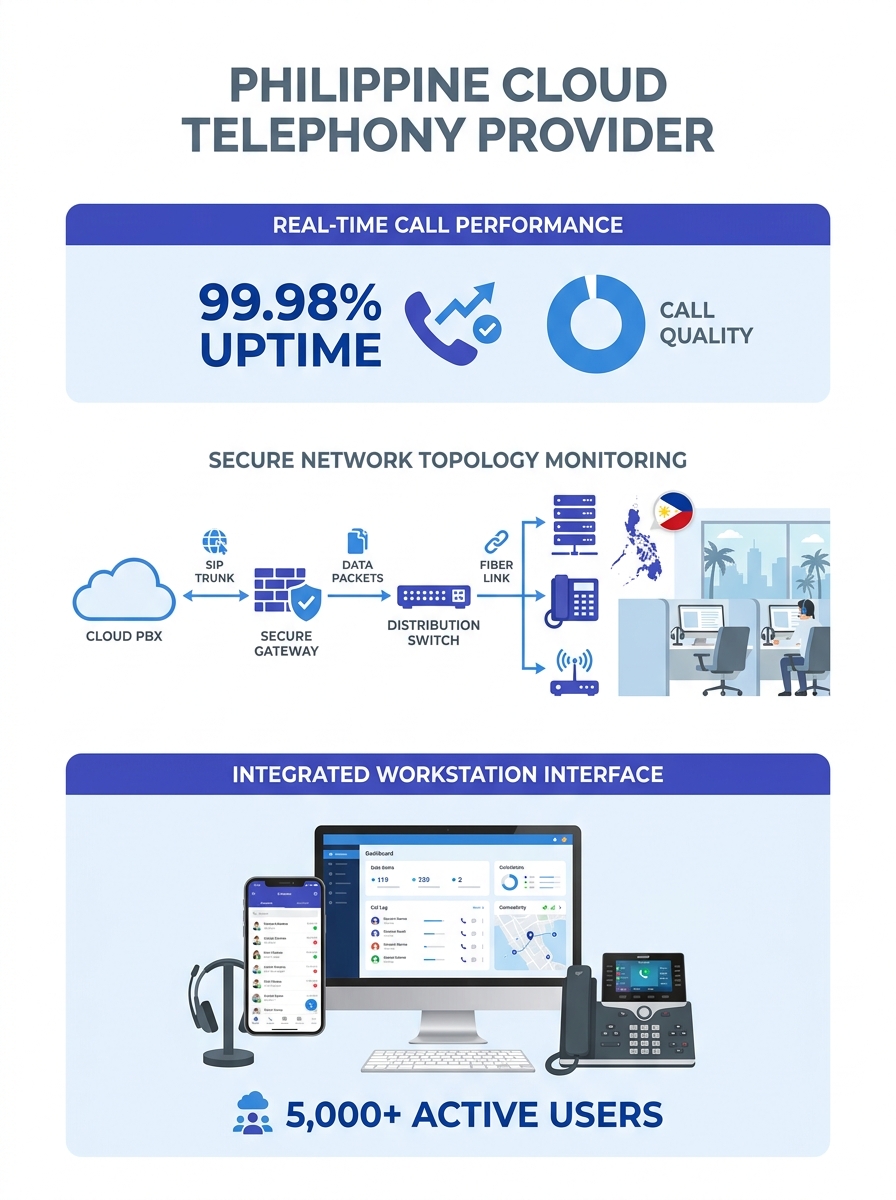
Legacy PBX Systems Reach End of Life as Manufacturers Exit Market
Between 90 and 95 percent of Philippine companies operate some form of PBX or PABX telephone system, but manufacturers discontinued production and support for these devices years ago as the industry shifted from analog to digital technology, Nygate said in an interview with the Philippine Star. The physical cable-based systems connect multiple office extensions to each other and to outside lines, enabling call recording, call monitoring, call reporting, and free inter-extension calls.
“PBXs are no longer supported and have reached the end of their life,” Nygate said. “Yet 90 to 95 percent of companies in the Philippines still have these telephony PABXs in their office.” The legacy telephone systems require dedicated physical cable networks that most manufacturers abandoned as cloud-based alternatives gained market share globally.
The company’s Internet-based telephony platform eliminates the need for on-premises PBX hardware by routing voice communications through data networks rather than traditional telephone lines. This approach aligns with broader enterprise migration toward unified communications platforms that consolidate voice, messaging, and collaboration tools over IP networks.
Voice Network Infrastructure Quality Drives Personal Phone Usage
The deteriorating condition of incumbent voice networks has pushed 90 to 95 percent of companies to rely on employees’ personal cellphones for business calls, according to Nygate. He attributed the shift to poor voice network quality from Globe Telecom and PLDT, citing “a lack of investment” that has left traditional telephone infrastructure “falling apart.”
“The telephony infrastructure in the country is very bad indeed and very expensive,” Nygate said. “So often these systems fall out of usage because they simply don’t work properly.” He pointed to the visible tangle of aerial cables along Philippine streets as evidence of aging infrastructure.
The hybrid and remote work arrangements common in Metro Manila, Cebu, and other business centers further reduce reliance on desk-bound office phones, making mobile devices the default communication tool for most employees. However, this practice creates operational and security risks when employees leave companies while retaining customer contact data on personal devices.
Data Retention and Security Risks From Personal Device Usage
Companies face commercial exposure when departing employees take customer relationships with them on personal phones, Nygate said. Some organizations attempt to mitigate this risk by issuing separate business phones to staff, but the approach adds hardware costs and management overhead without addressing the underlying infrastructure limitations.
“If you are a company and your staff are using their personal cellphones to make business calls, when one of your staff member resigns, he takes all that data with him,” Nygate said. The employee continues receiving calls from customers of the previous employer because the contact number remains in use on the personal device.
The pattern creates data governance challenges for organizations subject to privacy regulations or operating in regulated industries like business process outsourcing, where call recording and monitoring requirements conflict with personal device usage. Cloud telephony platforms address these gaps by maintaining centralized call records and routing business communications through company-controlled numbers regardless of employee device or location.
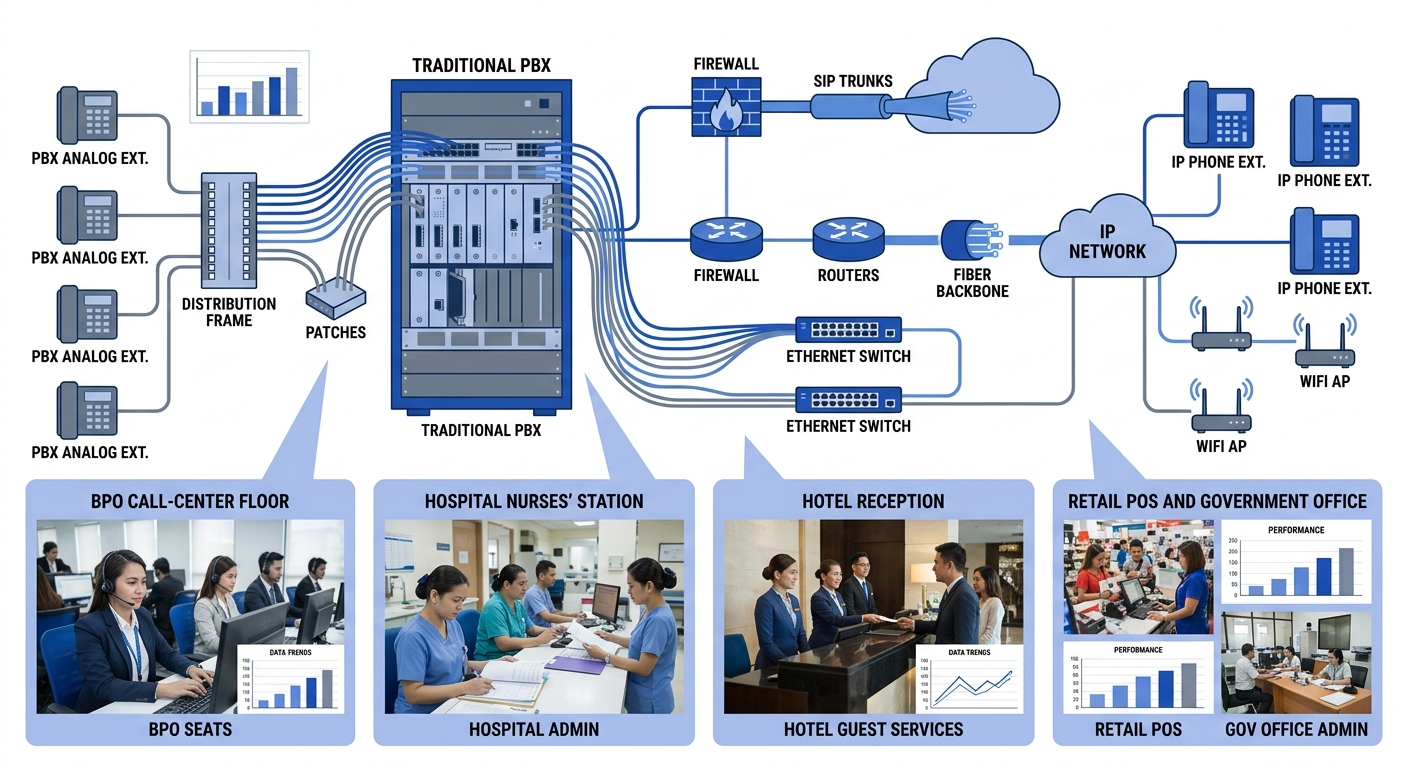
Enterprises evaluating migration from legacy PBX systems to cloud-based alternatives face network readiness questions around bandwidth, latency, and Quality of Service controls. Organizations planning similar transitions may reference VoIP network migration frameworks and network readiness assessment approaches documented in earlier Philippine enterprise deployments.
What This Means for IT Managers
The Konektadong Pinoy Act’s removal of franchise requirements creates competitive pressure on incumbent voice services and expands procurement options for enterprises locked into aging PBX infrastructure. IT managers evaluating replacement paths for end-of-life telephone systems now have access to foreign cloud telephony providers that previously faced regulatory barriers to market entry, potentially accelerating the shift from capital-intensive hardware deployments to operating-expense cloud models.
Organizations still running unsupported PBX equipment should inventory system age, vendor support status, and spare parts availability before hardware failures force reactive migration decisions. The combination of deteriorating voice network quality and expanding cloud telephony options strengthens the business case for Internet-based communication platforms, particularly for distributed workforces where desk phones no longer match operational realities.
The entry of providers like Velox Networks signals broader market opening under the new regulatory framework. Procurement teams should evaluate whether competitive Internet-based offerings deliver cost and feature advantages over traditional telephone line contracts, particularly for organizations already operating data networks capable of supporting quality-controlled VoIP traffic.