
More than 90% of ransomware attacks now attempt to delete or tamper with backup systems before deploying payloads, and nearly 60% of those attacks succeed in compromising backup repositories, according to a recent ransomware report cited by ZDNET. The findings underscore a shift in threat actor behavior that forces enterprises to move beyond backup storage capacity toward verified recovery capabilities.
TL;DR: Ninety percent of ransomware attacks now target backup systems first, with 60% succeeding in tampering with or deleting recovery data, forcing Philippine enterprises to prioritize tested recovery plans over backup volume alone.
The distinction between maintaining backups and achieving operational recovery has widened as attackers specifically research and disable backup infrastructure before encrypting production systems. A U.S. Chamber of Commerce study found that 94% of surveyed small and medium business leaders believed their organizations would survive a disaster event, yet only 25% maintained the recovery infrastructure needed to restore operations within acceptable timeframes.
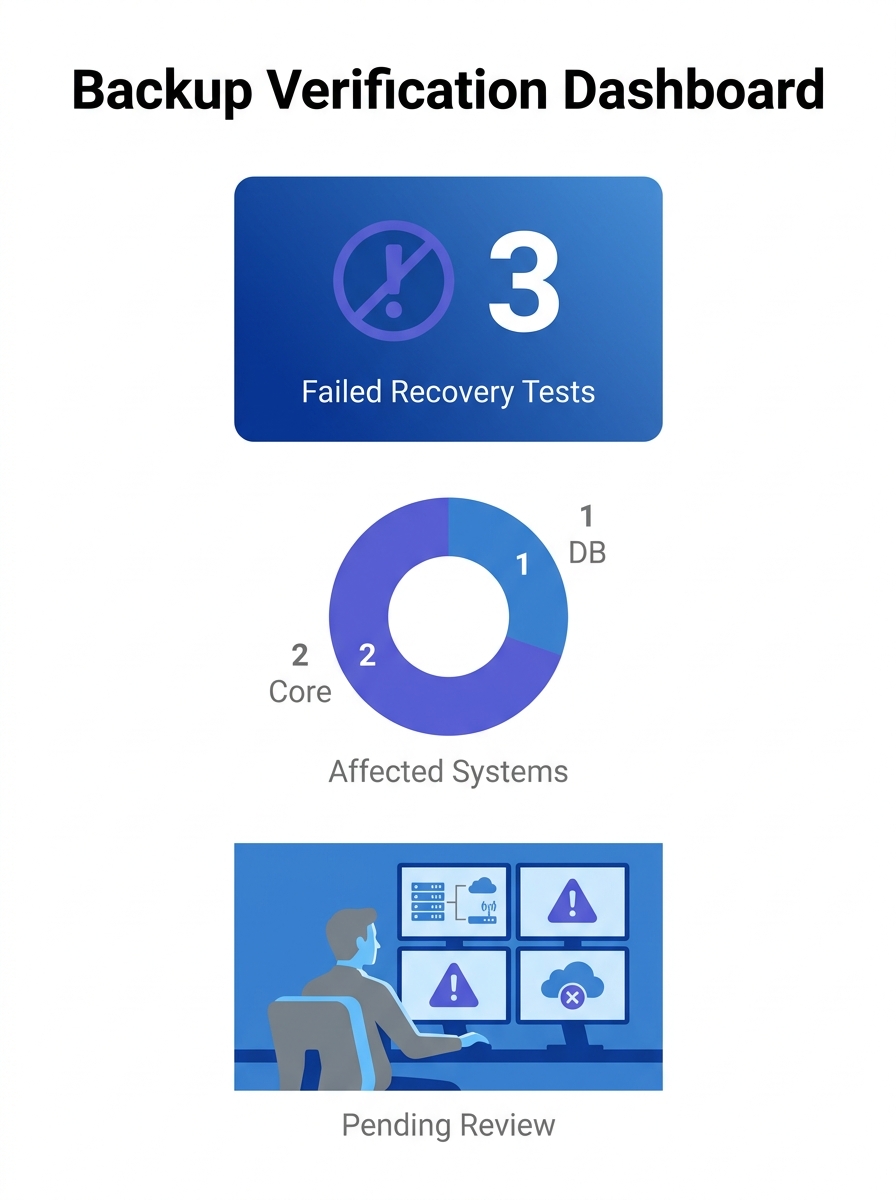
Philippine enterprises face similar gaps. Business process outsourcing centers, financial institutions, and healthcare providers that treat backup and recovery solutions as synonymous risk extended downtime when incidents occur, even when backup jobs report successful completion. The issue extends beyond data protection to encompass application recovery, identity system restoration, and business process continuity.
Identity-Based Attack Surface Expands in Hybrid Environments
Four in five ransomware attacks now begin with compromised credentials rather than network perimeter breaches, according to the ZDNET analysis. Attackers bypass firewalls by hijacking valid user sessions, exploiting weak multi-factor authentication implementations, or researching high-privilege account holders through public platforms like LinkedIn.
The Kaseya 2026 SaaS Security Report found that 69% of monitored SaaS accounts were guest accounts rather than licensed users, and only 27% of small and medium businesses actively enforced multi-factor authentication across cloud applications. Threat actors use these identity gaps to access backup repositories with legitimate credentials, often disabling recovery systems days or weeks before launching encryption payloads.
Hybrid infrastructure deployments in Metro Manila, Cebu, and Davao expand this attack surface as organizations shift workloads to cloud providers to avoid on-premises hardware acquisition costs. Network security solutions that focus solely on perimeter defense leave identity layers exposed, particularly when backup systems share authentication infrastructure with production environments.
Cloud Provider Shared Responsibility Model Leaves Recovery Gaps
Microsoft, Google, and other major cloud platforms operate under a shared responsibility model where the provider maintains service availability but customers retain responsibility for data protection and recovery. Built-in recycle bins, version history features, and retention policies address accidental deletions but do not provide operational recovery capabilities following large-scale ransomware incidents or coordinated account compromises.
A Redmond/Kaseya survey of 200 IT professionals found that only one in five organizations maintain unified backup protection across hybrid on-premises and cloud environments. The fragmentation forces IT teams to manage multiple recovery tools with inconsistent restoration processes, extending recovery time objectives beyond acceptable thresholds for business-critical applications.
Philippine government agencies subject to Executive Order 119 face additional complexity. The mandate requiring top-secret and classified data to remain within Philippine territory creates recovery planning challenges when cloud backups replicate across international data centers without geographic controls.
Recovery Testing Frequency Reveals Preparation Gaps
Fifty-three percent of IT professionals surveyed by Redmond/Kaseya reported feeling only “somewhat confident” they could restore their complete environment following a major incident. Only 18% conduct monthly recovery tests to validate backup integrity and restoration procedures.
Organizations that skip regular testing often discover backup corruption, incompatible application versions, or missing configuration data only during actual incidents when recovery timelines directly impact revenue and customer retention. Modern business continuity and disaster recovery platforms address this gap through automated verification processes. Datto’s Screenshot Verification feature, for example, automatically boots each backed-up system after job completion and captures a screenshot proving successful restoration.
The testing deficit affects sectors across the Philippine economy. Call centers lose billable hours during extended restoration periods. Hospitals delay patient care when electronic medical record systems remain offline. Hotels forfeit bookings when reservation platforms stay inaccessible. Financial institutions face regulatory penalties and customer attrition when transaction processing halts.
Cyber Insurance Requirements Drive Recovery Documentation
Cyber liability insurers increasingly require organizations to document recovery time objectives and recovery point objectives accurately before issuing policies, according to the ZDNET analysis. Insurers reject claims when post-incident investigations reveal actual recovery capabilities fell short of represented timelines.
Regulatory frameworks moving toward mandatory business continuity standards add compliance pressure. The European Union’s NIS2 directive includes explicit business continuity requirements that parallel emerging Philippine regulatory expectations from the Department of Information and Communications Technology and the National Telecommunications Commission.
Philippine enterprises evaluating data center solutions for disaster recovery now face requirements beyond storage capacity metrics. Recovery readiness assessments measure restoration speed, test frequency, backup immutability, credential isolation, and application-level recovery capabilities rather than backup volume or retention duration alone.
Context and Outlook
The shift from backup-centric to recovery-centric resilience planning affects Philippine IT infrastructure procurement across verticals. BPO operations dependent on 24/7 uptime must verify that backup systems can restore multi-site contact center platforms within minutes rather than hours. Government agencies managing citizen data under Executive Order 119 need recovery plans that maintain territorial storage requirements while enabling rapid restoration. Financial institutions require tested procedures for core banking system recovery that satisfy both cyber insurance underwriters and regulatory examiners.
Philippine enterprises that delay recovery readiness assessments face compounding risk as threat actors refine backup-targeting techniques and insurers tighten policy requirements. Organizations with hybrid infrastructure spanning on-premises systems and cloud platforms carry particular exposure when recovery tools lack unified orchestration across environments. The 18% monthly testing rate documented in the Redmond/Kaseya survey suggests most Philippine organizations operate with untested recovery assumptions that fail validation during actual incidents, converting manageable outages into extended business disruptions that permanent damage customer relationships and market position.
Recovery verification platforms, immutable backup architectures, and isolated credential management represent baseline requirements rather than advanced capabilities as ransomware groups systematically target the recovery infrastructure that enterprises assume will protect them. The data demonstrates attackers understand the backup-recovery distinction better than many of the organizations they compromise.