
Sixty-eight percent of Australian organizations deployed unified hybrid work communication platforms in 2026, shifting from emergency remote tools to integrated Cloud PBX, SD-WAN, and Microsoft Teams environments, according to a strategic infrastructure analysis released by telecommunications provider Broadconnect Australia on June 20. The report identifies professional telephony integration, secure connectivity, and managed firewall deployment as the three core infrastructure pillars replacing consumer-grade collaboration apps in distributed enterprise environments.
TL;DR: Two-thirds of Australian enterprises now run integrated Cloud PBX and SD-WAN platforms for hybrid work, replacing fragmented consumer apps with enterprise-grade telephony, connectivity, and security infrastructure.
The adoption trend reflects a maturation of hybrid work infrastructure from temporary video conferencing solutions to permanent, enterprise-grade systems designed for distributed workforces, the analysis states. Philippine IT managers evaluating unified communications platforms face similar infrastructure choices as Metro Manila, Cebu, and Davao offices transition from pandemic-era remote access tools to strategic hybrid work systems that maintain professional telephony standards across home and corporate locations.
The Disconnection Gap Driving Infrastructure Investment
Thirty-six percent of Australian employees reported feeling disconnected from their organizations despite widespread digital collaboration tool adoption, according to RewardGateway research cited in the Broadconnect report. The disconnection stems from technical fragmentation: staff managing separate platforms for voice calls, internal messaging, and video conferencing create information silos that force employees to juggle multiple communication identities, the analysis found.
“Information silos are a direct result of using unlinked platforms for voice, chat, and video,” the report states. The fragmentation creates a productivity tax as employees manage communication streams that lack integration with professional telephony systems.
Philippine enterprises operating BPO centers, regional bank branches, and multi-site hospital networks encounter the same fragmentation when remote staff use personal mobile numbers for client calls rather than corporate phone extensions that follow employees across locations. The professional credibility gap—clients experiencing inconsistent call quality depending on whether they reach an employee at a Metro Manila headquarters or a home office—drove Australian organizations to prioritize Cloud PBX deployment over standalone collaboration apps, according to the infrastructure analysis.
Cloud PBX and SD-WAN Deployment as Hybrid Work Foundation
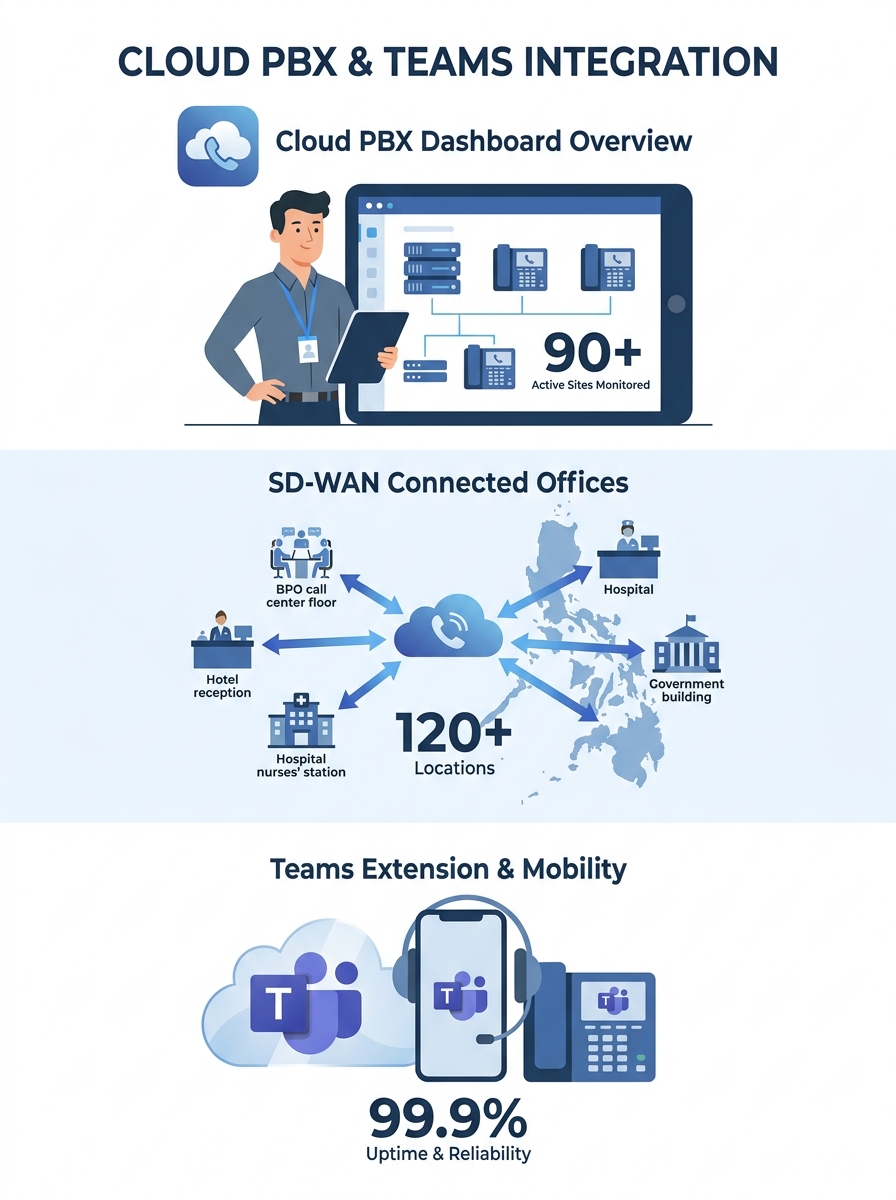
The Australian infrastructure shift centers on two technologies: Hosted Cloud PBX systems that provide consistent corporate phone extensions regardless of physical location, and SD-WAN networks that guarantee voice quality over internet connections replacing dedicated MPLS circuits, the Broadconnect report explains. Organizations integrating Microsoft Teams with Cloud PBX create a single unified identity for each employee—desktop phone, mobile softphone, and Teams client ring simultaneously when a corporate number receives a call.
“Professional telephony remains the essential anchor for external business credibility,” the analysis states. “A client should experience the same high-quality interaction whether they reach a staff member at their desk in Melbourne or at a remote site in regional Australia.”
Philippine enterprises evaluating SD-WAN versus MPLS for multi-site VoIP deployment face the same architectural decision: whether to maintain legacy dedicated circuits for branch connectivity or transition to SD-WAN overlays that prioritize voice traffic across commodity internet links. The Broadconnect analysis identifies SD-WAN as the connectivity backbone enabling Cloud PBX deployments across distributed workforces without requiring dedicated voice circuits to each home office.
Australian organizations deploying SD-WAN alongside Cloud PBX reported eliminating the technical friction of consumer-grade internet connections—packet loss, jitter, and latency spikes that degrade call quality—by applying quality-of-service policies at the WAN edge, according to the infrastructure guide. The same QoS requirements apply to Philippine enterprise networks where VoIP call quality depends on proper router configuration to prioritize voice packets during periods of network congestion.
Security Architecture for Borderless Hybrid Networks
The third infrastructure pillar identified in the Australian analysis is managed firewall deployment to secure remote worker environments. Traditional network perimeters dissolve when home offices become permanent corporate sites; the security model must shift from protecting a physical building to protecting distributed endpoints, the Broadconnect report states.
Organizations deploying hybrid work platforms face a choice: extend corporate firewall policies to home offices via VPN tunnels, or deploy zero-trust network access models that authenticate every connection regardless of origin, the analysis explains. Australian enterprises adopting Cloud PBX and SD-WAN platforms simultaneously deployed managed firewall services to prevent unauthorized access to voice systems—a vulnerability that enables executive voice deepfake attacks when VoIP phones lack proper security hardening.
Philippine government agencies and enterprises storing sensitive data face similar security requirements when deploying hybrid work communication infrastructure. The National Privacy Commission’s data protection regulations require organizations to maintain the same security controls for remote access as they apply to on-premise systems, making managed firewall deployment a compliance requirement rather than an optional security enhancement.
The Broadconnect infrastructure guide identifies regulatory compliance as a key driver of the shift from consumer-grade apps to enterprise platforms. The Victorian Equal Opportunity Amendment Bill and nbn wholesale price changes both created infrastructure requirements that pushed Australian organizations toward professionally managed communication systems, the report states.
Government Implications
Philippine government agencies evaluating hybrid work infrastructure face the same fundamental choice the Australian study documents: continue managing fragmented collaboration apps that create disconnection and security gaps, or deploy integrated Cloud PBX, SD-WAN, and managed firewall platforms that provide consistent professional telephony across distributed office locations. The DICT’s digital government transformation roadmap assumes agencies can maintain service quality as staff work from multiple locations—an assumption that requires enterprise-grade communication infrastructure rather than consumer video conferencing tools.
National government offices, local government units, and Constitutional bodies operating multi-site networks in Metro Manila, regional capitals, and provincial centers need the same professional telephony integration that drove two-thirds of Australian organizations to deploy Cloud PBX platforms. A citizen calling a government hotline should experience the same call quality whether the agent answers from a Quezon City office tower or a home workspace in Antipolo—a service standard that requires the unified communication architecture the Broadconnect analysis describes.
The security dimension carries particular weight for agencies handling citizen data. When a Department of Health employee accesses patient records from home, or a Bureau of Internal Revenue analyst reviews tax filings remotely, the agency must extend the same firewall protection and access controls that exist in its physical offices. The Australian infrastructure model—Cloud PBX for professional telephony, SD-WAN for quality connectivity, and managed firewalls for distributed security—provides a deployment framework that Philippine agencies can adapt to meet local regulatory requirements under the Data Privacy Act and government cybersecurity policies.