
Broad Connect, an Australian business telecommunications consultancy, published a strategic guide on June 21 addressing cloud-based call center systems for small businesses, documenting the sector’s shift from hardware PBX infrastructure to AI-enhanced cloud ecosystems that scale from three users to 300 without capital expenditure, according to the firm’s analysis.
TL;DR: The 2026 guide outlines how small businesses are abandoning on-premise PBX hardware for cloud platforms that deliver intelligent IVR, AI voice agents, and Microsoft Teams integration on a monthly recurring cost model.
The guide frames call center technology selection as a strategic business decision rather than a pure infrastructure choice, positioning cloud-native platforms as the default architecture for organizations seeking enterprise-grade features without dedicated IT departments. “The standard for call centre phone systems for small business has shifted from heavy hardware to agile, AI-enhanced cloud ecosystems,” the guide states, highlighting the end of traditional hardware-bound systems that require significant upfront capital and ongoing manual maintenance.
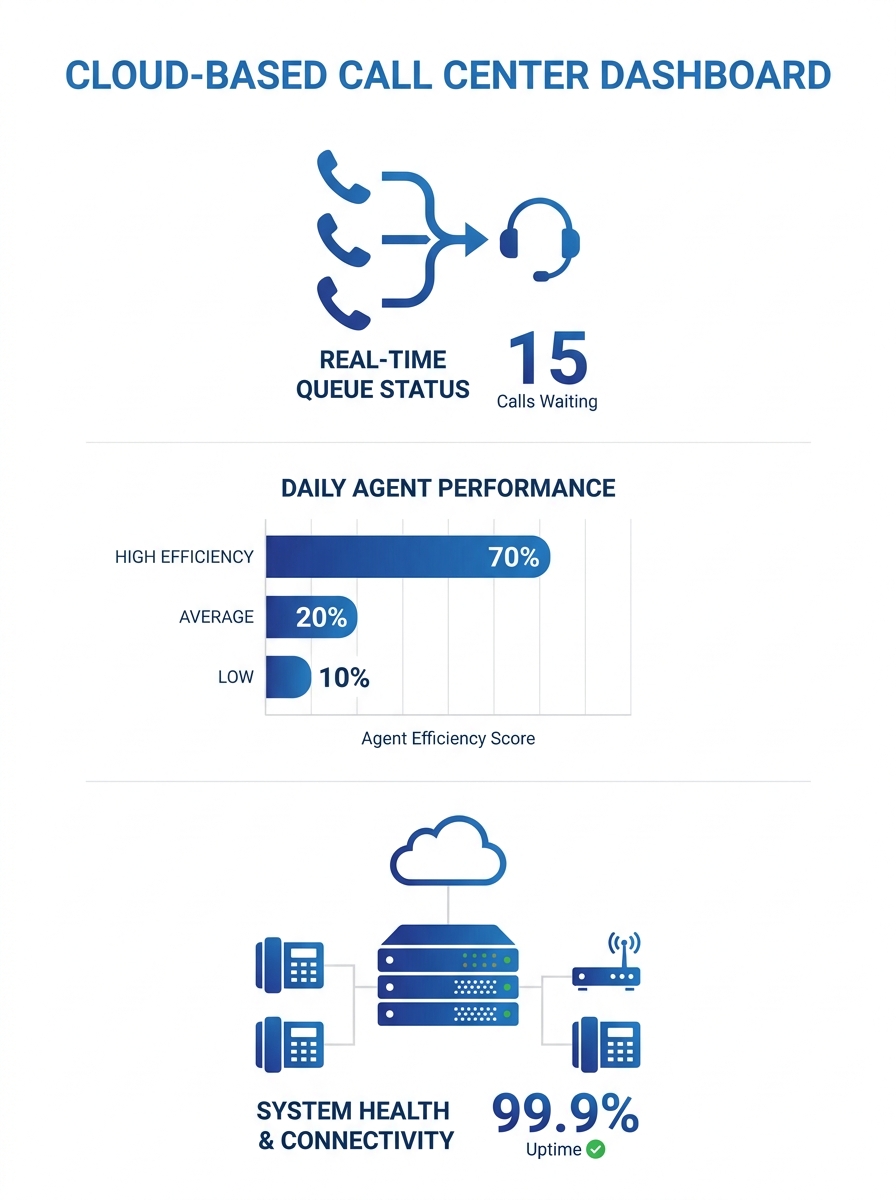
Cloud Migration as Strategic Imperative
The guide identifies maintaining physical phone cabinets in local offices as a “strategic liability” for small and medium businesses in 2026. Legacy on-premise systems demand large capital expenditures and continuous manual upkeep, diverting resources from core business objectives, the analysis notes. Cloud-based alternatives operate on predictable monthly recurring models, transferring the burden of security patches and firmware updates to the service provider.
This maintenance-free environment ensures critical infrastructure remains current without internal technical expertise or expensive on-site technician visits, the guide explains. The shift represents a transition from owning depreciating hardware assets to accessing high-performance services that automatically update with industry best practices. Philippine enterprises evaluating similar transitions have documented comparable cost advantages in hybrid unified communications deployments that eliminate hardware refresh cycles.
For organizations operating across remote and office locations, cloud platforms deliver consistent professional presence regardless of physical location. The guide positions this flexibility as essential for hybrid workforce models where staff maintain unified customer experiences from any environment. Modern systems ensure operational continuity without geographic constraints, a capability traditional PBX infrastructure cannot replicate.
AI and Automation Features Highlighted
Broad Connect’s guide details intelligent IVR (Interactive Voice Response) systems that function as digital concierges, routing callers to correct departments without unnecessary transfers. Advanced call queuing with automated callback features ensures every customer interaction receives professional handling even during peak volume periods, the analysis shows. These capabilities were previously accessible only to enterprises with dedicated contact center budgets.
AI-driven sentiment analysis and automated response systems now operate within platforms designed for three-person teams, democratizing tools that multi-national corporations deployed years earlier, according to the guide. The technology shift enables small businesses to project operational efficiency comparable to global enterprises without proportional overhead investment.
The guide emphasizes data-driven insights as a core advantage of modern cloud systems. Centralized communication ecosystems provide visibility into call volumes and staff performance metrics that were impossible without dedicated IT departments in legacy environments. Decision-makers refine customer service strategies based on factual performance data rather than estimates, the guide notes. Philippine BPO operations have documented similar operational improvements after consolidating branch PBX systems into unified platforms.
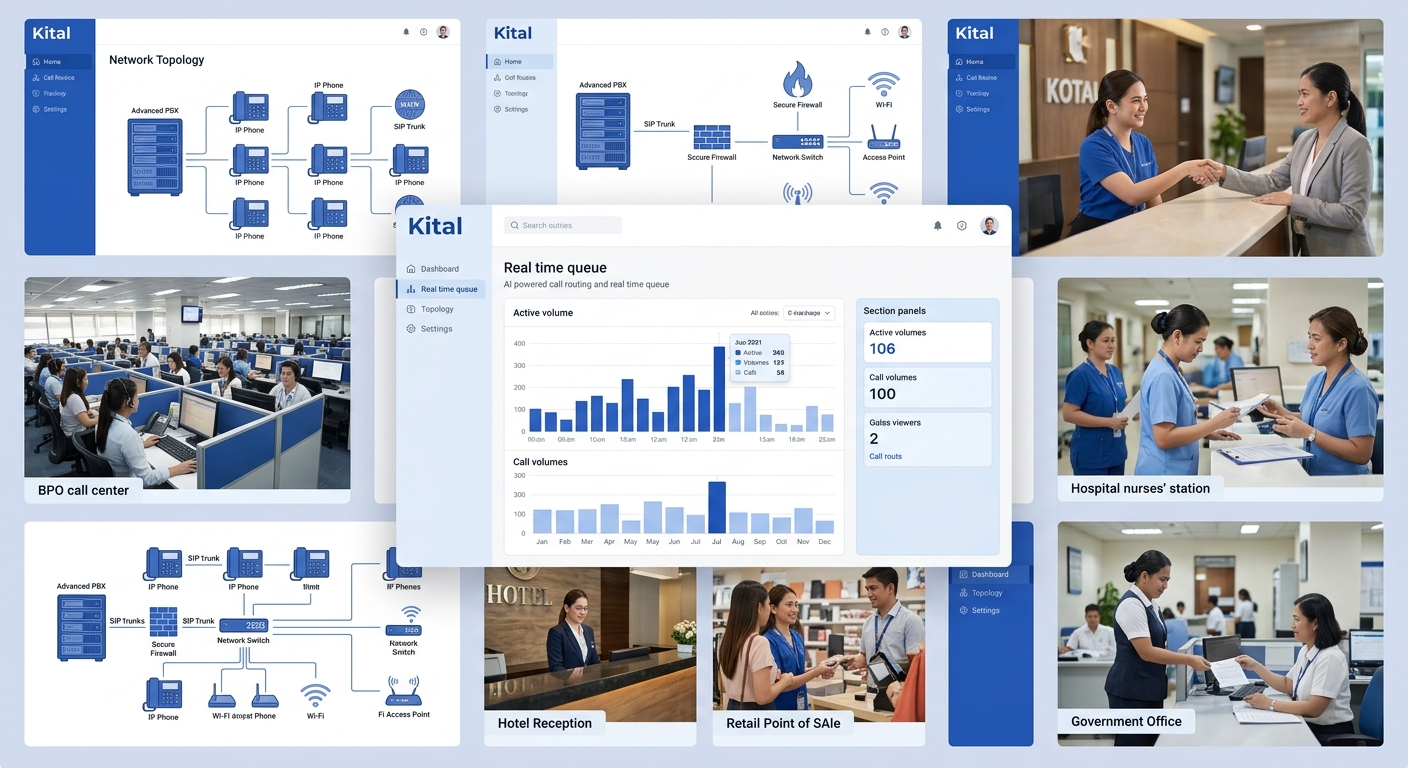
Scalability and Cost Model
Cloud-native platforms enable instant activation of new seats, allowing businesses to manage seasonal peaks or rapid growth without over-investing in permanent infrastructure, the guide explains. Scalability operates with “surgical precision,” according to the analysis, as organizations pay only for capacity actually used rather than provisioning for worst-case scenarios.
The guide documents a cost model where three-user deployments scale to 300 users on identical platforms, maintaining consistent feature sets across the entire range. Softphones enable hybrid workforces to maintain unified professional presence from any location, ensuring customer experience consistency regardless of team distribution. This elastic capacity model aligns communication costs directly with current headcount rather than projected future needs.
Broad Connect positions business-grade connectivity and SD-WAN as foundational requirements for cloud call center deployments, ensuring consistent call quality and network resilience across distributed environments. The guide compares Hosted PBX architectures against Microsoft Teams integrations, advising businesses to evaluate which unified communication framework best supports specific workflow requirements and growth trajectories.
Australian-based technical support appears as a recurring theme in the guide’s vendor selection criteria, emphasizing local support infrastructure for critical voice systems. The analysis recommends clarity on total cost of ownership calculations that account for implementation, training, and ongoing support rather than headline monthly seat pricing alone.
Government Implications
Philippine government agencies evaluating call center and citizen service platforms face the same architectural choice Broad Connect’s guide addresses: capital-intensive hardware deployments versus cloud-native monthly-cost models. National government agencies operating regional offices across Metro Manila, Cebu, and Davao would benefit from cloud platforms that eliminate per-site PBX hardware while maintaining centralized visibility into service performance.
The guide’s emphasis on AI-enhanced IVR and intelligent routing directly applies to government hotlines handling citizen inquiries across multiple departments. Automated callback features prevent dropped calls during peak periods—a common complaint in public-sector service centers. Cloud platforms deliver these capabilities without requiring agencies to build in-house AI development teams.
Local government units considering citizen engagement platforms should note the guide’s cost model: three-agent deployments that scale to 300 agents on identical infrastructure. This scalability suits provincial offices with variable staffing needs across election cycles and disaster response periods. The shift from capital expenditure to operational expense aligns with annual budget cycles rather than multi-year procurement processes, though agencies must ensure VoIP security hardening controls meet government data protection standards before deployment.