PLDT Inc. announced it will deploy KAI, an advanced agentic AI conversational agent developed by New York-based UiPath, making the Philippine telco the first in Southeast Asia to use the platform for enterprise client engagement, according to Philstar.com. The deployment went live this week through PLDT’s business unit, PLDT Enterprise.
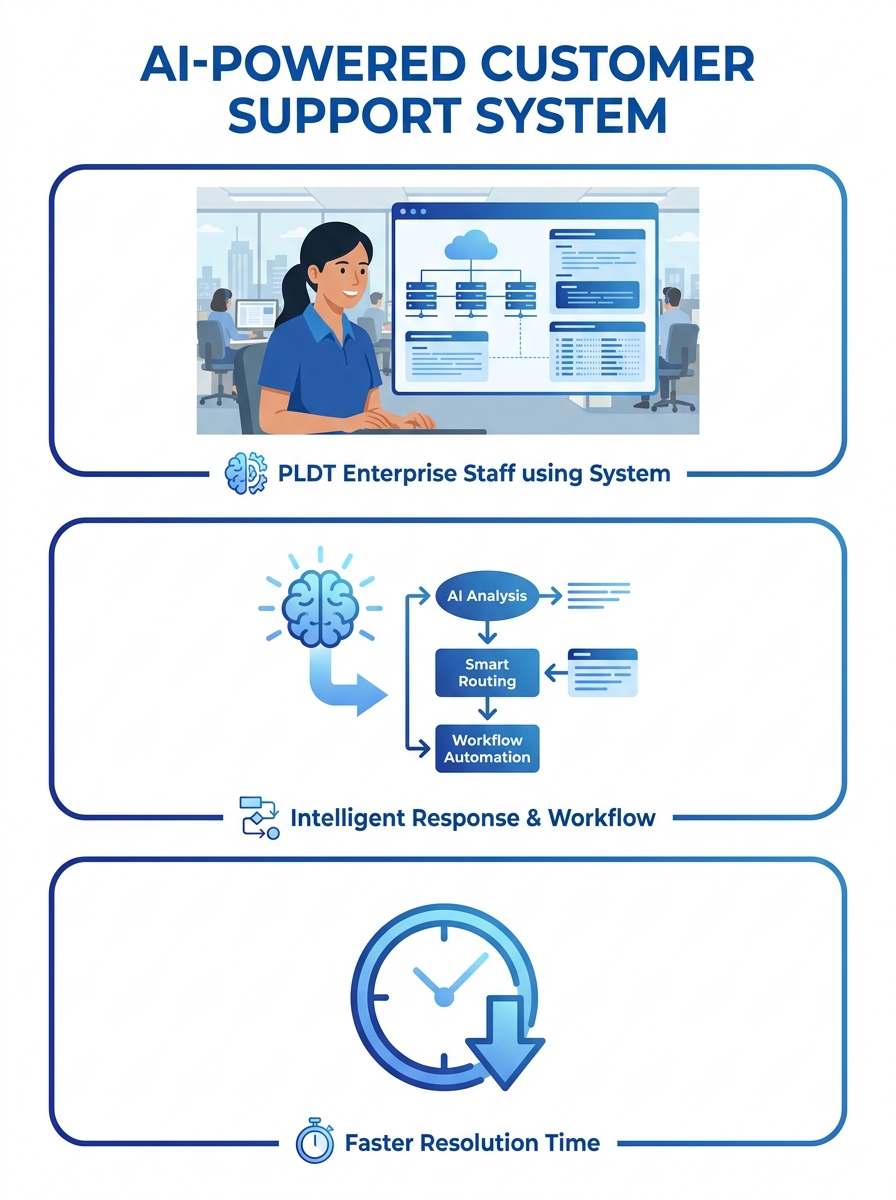
The move marks a shift in how Philippine telcos handle enterprise sales and support operations. KAI—short for Knowledge, Automation, Intelligence—is designed to produce customer-requested information in “split seconds,” eliminating the lag time sales and support teams face when digging through documentation during client conversations. The platform represents what UiPath calls one of the most advanced agentic AI solutions currently available, capable of automating solution design based on customer-specific requirements.
How the AI Agent Works in Practice
Eric Santiago, PLDT’s head of network strategy, explained the operational difference in a statement yesterday. “Before KAI, our teams had to dig for answers in the middle of a customer conversation,” Santiago said. “Now the information comes to them. That improves how fast we respond, how well we design the solutions, how much our customers trust us.”
The telco plans to train personnel on what data to input into KAI to develop customized solutions for clients. Santiago noted that PLDT aims to automate the creation of solutions tailored to specific customer needs, moving beyond information retrieval to active solution generation. For enterprise clients evaluating network availability or comparing service options, the AI agent is expected to reduce validation time and streamline the technical specification process.
UiPath Partnership and Regional Benchmark
PLDT’s partnership with UiPath aligns with the telco’s stated goal of shifting to “tech-enabled selling,” combining AI capabilities with human engagement rather than replacing sales staff outright. Amit Khandelwal, UiPath’s regional vice president and managing director for Southeast Asia, stated that PLDT is setting a new benchmark for telecommunications providers in the region. He indicated the deployment would demonstrate what AI tools can deliver in terms of measurable business outcomes.
The technology addresses a specific pain point in enterprise telecommunications sales: the gap between a client’s technical question and the sales team’s ability to surface accurate network specifications, pricing configurations, or service-level agreement details without escalating to engineering teams. By embedding that information access directly into the sales conversation, PLDT is betting it can shorten sales cycles and improve proposal accuracy.
Competitor Context in Philippine Telecom AI Adoption
PLDT’s deployment follows a recent announcement by rival Globe Telecom Inc., which disclosed last week it has reached 90-percent adoption of Google’s Gemini for Workspace AI suite across its workforce. Globe reported using the platform for functions ranging from quality assurance to custom workflow automation, citing company-wide productivity gains.
The parallel AI investments by both major Philippine telcos signal a broader industry trend toward automation in customer-facing operations and internal processes. While Globe’s deployment focused on general productivity tools for staff, PLDT’s KAI implementation targets a narrower use case: enterprise sales and solution design. The distinction reflects different strategic priorities—Globe emphasizing internal efficiency across all departments, PLDT concentrating on enterprise revenue operations.
Both approaches share a common objective: reducing the time between customer inquiry and actionable response, whether that’s an internal workflow approval or an external sales proposal. For Philippine enterprises evaluating unified communications providers, the AI capabilities of their prospective vendors are becoming a visible differentiator in service delivery speed and technical responsiveness.
What Happens Next
IT decision-makers at Philippine enterprises should expect similar agentic AI deployments to propagate across other telecom and managed service providers over the next 12 to 18 months. The technology’s ability to surface network specifications, validate service availability, and auto-generate solution configurations in real time changes the sales engagement model for complex enterprise telecom and unified communications projects. Organizations accustomed to multi-week RFP response cycles may see turnaround times compress as vendors adopt comparable AI-assisted tools.
PLDT’s regional-first status gives the telco a testing ground for measuring whether agentic AI actually shortens sales cycles and reduces solution design errors before competitors deploy equivalent platforms. Enterprises currently in procurement for PBX replacements, SD-WAN rollouts, or cloud voice migrations should ask prospective vendors whether their sales and support teams use AI-assisted information retrieval—and request specifics on response time improvements and proposal accuracy metrics tied to those systems.
The competitive pressure from Globe’s Gemini adoption suggests PLDT will publicly report usage metrics or customer satisfaction improvements tied to KAI within two quarters, providing the first quantifiable data on agentic AI’s ROI in Philippine enterprise telecommunications.