
Telecom operators deploying purpose-built cloud platforms for voice, video, and messaging workloads achieve 30–40% lower total cost of ownership compared to generic public cloud infrastructure, according to industry analysis published May 30 by Pluribus International. The vendor guidance cites case studies from Vodafone, which reduced capital expenditure 30% after deploying its 5G core on AWS Wavelength zones, and Rakuten Mobile, which cut operating costs 40% using a fully virtualized, cloud-native network architecture.
TL;DR: Purpose-built telecom cloud platforms designed for real-time communications workloads deliver measurably lower costs and better performance than generic hyperscalers, with operators reporting 30–40% savings when infrastructure supports carrier-grade latency and availability requirements.
The analysis highlights a persistent technical gap: public clouds built for web applications lack native support for 3GPP standards, ETSI NFV orchestration frameworks, and the sub-10-millisecond latency budgets required for voice-over-LTE handoffs and unified communications sessions. Generic infrastructure struggles to meet 99.999% uptime targets and telecom-specific compliance requirements around data residency and network slicing, according to the Pluribus assessment.
Why Generic Cloud Fails Real-Time Communications
Telecom workloads impose performance requirements that hyperscalers weren’t architected to handle, the analysis notes. Voice and video services demand packet loss below 0.1%, jitter under one millisecond, and automated failover within 50 milliseconds, thresholds that general-purpose virtual machines can’t consistently guarantee under variable multi-tenant load.
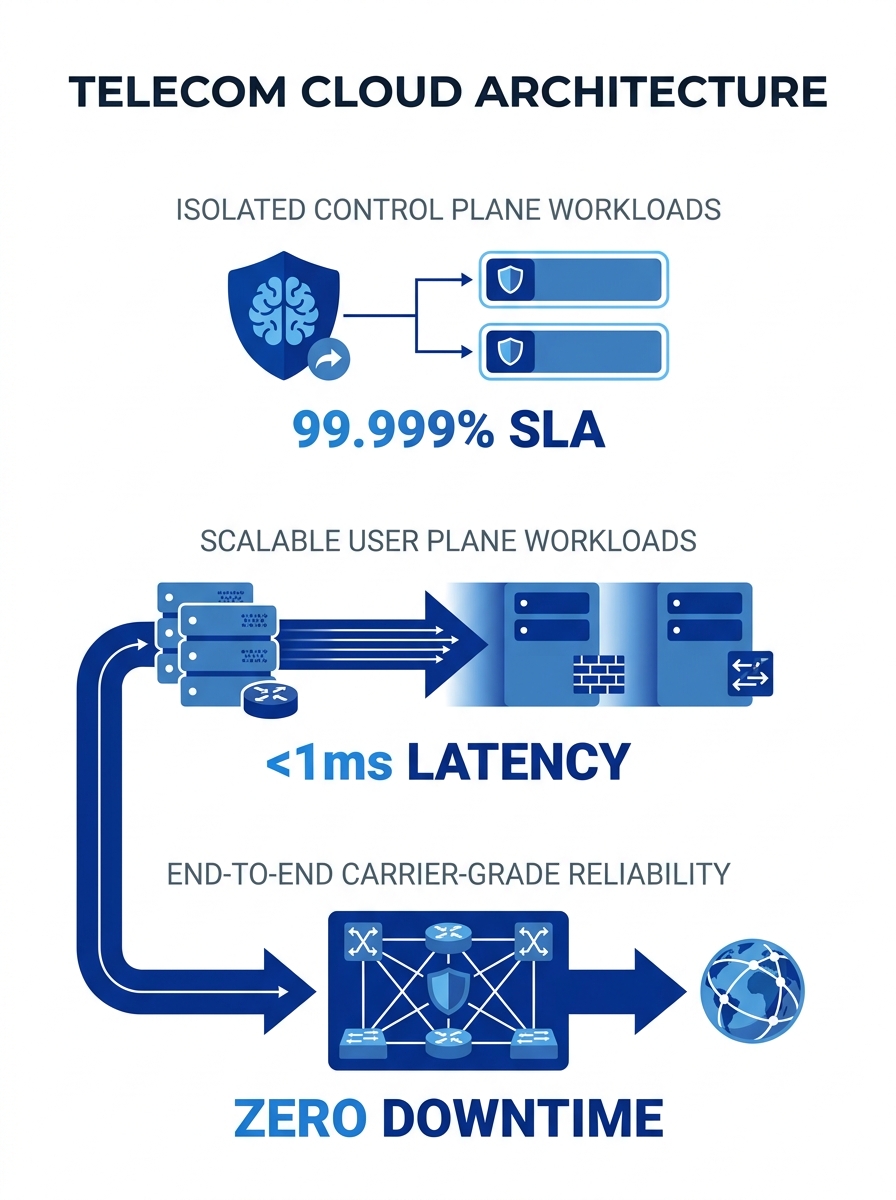
Vodafone’s deployment of its Telco Cloud on AWS Wavelength zones embedded in metro cell towers reduced round-trip latency 40% for augmented-reality and virtual-reality services by processing traffic at the network edge rather than routing to distant hyperscaler data centers, per a 2023 AWS case study cited in the guidance. The architecture physically separates control-plane signaling from user-plane media processing, preventing CPU contention that degrades voice quality during traffic spikes.
Rakuten Mobile’s cloud-native network, built entirely on Kubernetes and Open RAN rather than traditional hardware vendors, onboarded five million subscribers within 24 months while maintaining the 40% cost advantage, according to the company’s 2022 annual report referenced in the analysis. The operator avoided capital expenditure on proprietary telecom equipment by running session border controllers, IMS cores, and billing systems as containerized workloads on commodity servers.
Community Cloud Models Gain Traction
The Pluribus analysis advocates for “community cloud” deployment models, shared infrastructure operated by or for multiple telecom providers within regulatory boundaries. These platforms offer specialized tooling for carrier-grade service-level agreements, geographic data sovereignty, and network function virtualization orchestration that public hyperscalers don’t provide as managed services.
Philippine telecom operators evaluating enterprise telephone systems modernization face similar architectural choices: migrate legacy PBX and session initiation protocol infrastructure to generic cloud instances, or deploy on platforms designed specifically for real-time communications protocols. The analysis recommends isolating SIP proxies and media gateways on dedicated compute nodes using single-root I/O virtualization or Data Plane Development Kit packet processing to prevent noisy-neighbor performance degradation.
Operators pursuing cloud migration must enforce carrier-grade service-level commitments in vendor contracts, guarantees that packet loss remains below 0.1%, jitter below one millisecond, and automated failover completes within 50 milliseconds, the guidance states. Standard 99.9% uptime targets that suffice for web applications expose telecom providers to regulatory penalties and customer churn when voice services experience outages.
Deployment Paths for Philippine Operators
The analysis outlines three implementation approaches for telecom-grade cloud infrastructure: build proprietary platforms using OpenStack, Kubernetes, and Open Network Automation Platform tooling; join industry consortiums like TM Forum Catalyst projects that share research and development costs; or adopt managed offerings from AWS Wavelength, Microsoft Azure for Operators, or Google Anthos for Telecom that provide telco-specific features with less operational control.
Metro Manila business process outsourcing call centers handling voice traffic for multinational clients and provincial hospitals deploying IP telephony across distributed clinics encounter identical latency and reliability constraints documented in the vendor case studies. Infrastructure designed for batch processing or asynchronous web requests introduces jitter that manifests as choppy audio and dropped video conferences, performance issues that VoIP call quality monitoring frameworks help diagnose but purpose-built platforms prevent architecturally.
The guidance warns against “lift-and-shift” migration strategies that move legacy operations support systems and business support systems to cloud virtual machines without refactoring applications for distributed environments. Operators that migrate monolithic billing platforms or home location registers without decomposing database dependencies and authentication workflows often experience weeks-long debugging cycles when hidden architectural assumptions break, according to the analysis.
The Takeaway
Philippine unified communications providers, internet service providers, and enterprise IT teams evaluating network modernization now have quantified cost and performance benchmarks from established telecom operators. Vodafone’s 30% capital expenditure reduction and Rakuten’s 40% total-cost-of-ownership advantage demonstrate that purpose-built platforms deliver measurable financial returns when deployments align architecture with real-time communications workloads rather than forcing telecom protocols onto generic infrastructure.
The analysis arrives as Philippine operators expand IP telephony and cloud contact center deployments across archipelago geography where latency and resilience matter more than raw compute pricing. Metro Manila enterprises migrating from on-premise PBX systems to cloud platforms face the same build-versus-buy tradeoffs that global carriers navigated, decisions where carrier-grade service-level agreements and native support for session border controllers often justify premium infrastructure costs over hyperscaler commodity pricing.
Operators evaluating vendor proposals should demand contractual guarantees on jitter, packet loss, and failover timing rather than accepting marketing claims about “five nines” availability, the guidance concludes. Philippine telecom infrastructure serving BPO voice traffic, telemedicine video consultations, and government unified communications cannot tolerate the performance variability that web applications absorb, a technical reality that commodity cloud economics don’t address.