
IT investments often require large upfront spending, long approval cycles, and multi-year commitments. While these investments are meant to support growth, they can also expose businesses to financial risk that is easy to underestimate.
Technology changes quickly. Systems that seem reliable today can lose value within a few years. This puts pressure on finance and IT leaders to justify costs while managing long-term impact.
Here’s where subscription-based communication services offer a more flexible approach. They change how companies manage cost, ownership, and risk, making IT spending easier to control and align with business needs.
The Hidden Financial Risks of Upfront IT Spending
Traditional IT models rely on capital expenditure. Companies invest heavily in infrastructure such as servers, PBX systems, and networking equipment. While ownership may seem beneficial, it comes with real financial drawbacks.
- Capital strain is one of the biggest challenges. Large upfront costs limit the available cash that could be used for expansion or operations.
- Depreciation also affects long-term value. IT assets lose value over time, often faster than expected. Subscription-based IT arrangements highlight how these assets impact financial reporting and balance sheets.
- Technology obsolescence adds another layer of risk. Communication systems can become outdated within a few years, forcing companies to reinvest sooner than planned.
For finance teams, this creates uncertainty. It becomes harder to match IT spending with long-term business value.
What Is Subscription-Based IT?
Subscription-based IT replaces upfront purchases with recurring payments. Instead of owning infrastructure, businesses pay for access to systems and services.
This model is widely used in cloud communications, managed services, and modern telecom environments. It includes solutions such as hosted PBX, unified communications, and secure connectivity platforms.
For example, businesses exploring scalable voice systems can look at solutions like PBX for large enterprises that support flexible deployment instead of fixed hardware investments.
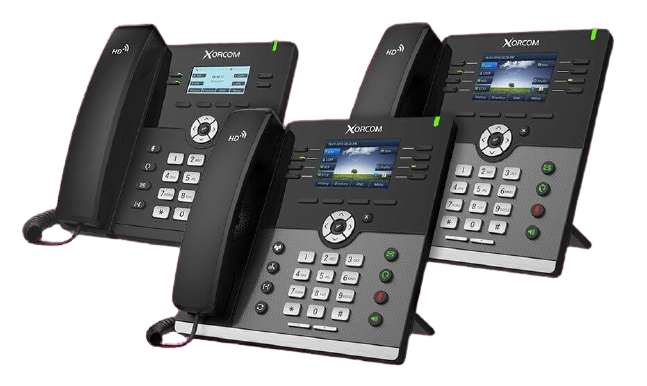
Subscription-based communication services also cover network security and session management. The key difference is simple. Companies pay for what they use instead of owning the system outright.
Shifting from CAPEX to OPEX
Understanding CAPEX vs. OPEX in IT projects is critical for financial planning.
With CAPEX, companies invest upfront and record the asset over time. This requires long-term forecasting and carries risk if business needs change.
With OPEX, costs are spread out as operating expenses. This creates a more predictable and manageable cost structure.
Subscription-based IT allows organizations to align costs with actual usage, reducing the gap between investment and value.
For telecom financial planning, this shift offers clear advantages:
- Easier budgeting and forecasting
- Faster approval cycles
- Better alignment between cost and usage
Instead of committing to a large expense, companies can adjust spending based on current demand.
How Subscription Models Reduce Financial Risk
Subscription-based IT directly reduces several key financial risks.
- Improved cash flow. Costs are spread over time, reducing the need for large capital outlays and preserving working capital.
- Lower asset exposure. Businesses avoid owning depreciating technology, which reduces long-term financial risk.
- Predictable expenses. Recurring payments make budgeting more consistent and easier to manage.
- Reduced maintenance costs. Many subscriptions include support, updates, and system management, limiting unexpected expenses.
For organizations managing complex systems, modern telecommunications solutions increasingly follow subscription-based communication services to improve efficiency and cost control.
Enabling Continuous Upgrades and Business Agility
One major advantage of subscription-based IT is staying current without large reinvestments.
In traditional setups, upgrades often require another capital expense. This slows down innovation and delays adoption of new technology.
With subscription-based communication services:
- Updates are included
- Systems evolve with business needs
- New features can be adopted faster
This improves agility. Companies can respond quickly to operational changes, remote work demands, and customer expectations.
For example, secure solutions supported by ribbon communications allow businesses to scale without replacing existing infrastructure. From a financial standpoint, this reduces the risk of falling behind due to outdated systems.

A Practical Framework for Decision-Makers
CFOs and IT leaders need a clear way to evaluate IT investments. This framework can help guide decisions:
- Evaluate the total cost of ownership. Look beyond upfront cost. Include maintenance, upgrades, and operating expenses.
- Assess flexibility needs. If your business changes frequently, scalable subscription models offer more value.
- Identify risk exposure. Consider risks tied to depreciation, obsolescence, and unused capacity.
- Align with cash flow strategy. If preserving capital is a priority, OPEX provides better control.
- Measure long-term ROI. Faster deployment and ongoing updates can improve returns over time.
- This approach ensures IT decisions support both financial stability and operational performance.
Take Control of Your IT Strategy with a Smarter Telecom Financial Planning
Subscription-based IT gives organizations a more stable and flexible way to manage technology investments. Instead of locking capital into assets that quickly lose value, businesses gain the ability to scale, adapt, and plan with greater confidence.
This shift is not just about reducing costs. It is about improving decision-making across finance and IT.
Strong telecom financial planning requires solutions that balance performance, risk, and long-term value. Subscription-based communication services support this by aligning expenses with actual usage, reducing uncertainty, and keeping systems up to date without repeated capital investment.
Kital helps enterprises make this transition with clarity and confidence. With over 30 years of experience, Kital delivers advanced telecommunications solutions, IP telephony, and secure communication systems designed for flexibility and reliability. Through partnerships with globally recognized technology providers, Kital brings proven solutions that support both operational efficiency and financial control.
If you are reviewing your IT investment strategy or looking to reduce financial risk, now is the time to explore a more flexible model. Connect with us today to discuss how subscription-based IT can support your business growth while strengthening your financial position.