
The Philippine Chamber of Telecommunications Operators challenged National Telecommunications Commission fines imposed on major carriers last week, arguing the regulator violated due process and failed to disclose testing methodologies used to determine service deficiencies, according to a statement released Wednesday.
TL;DR: PCTO claims NTC imposed ₱100,000 daily fines on Globe, Smart, and DITO starting September 25 without adequate notice or clear testing standards, raising procedural concerns that could affect network investment resources.
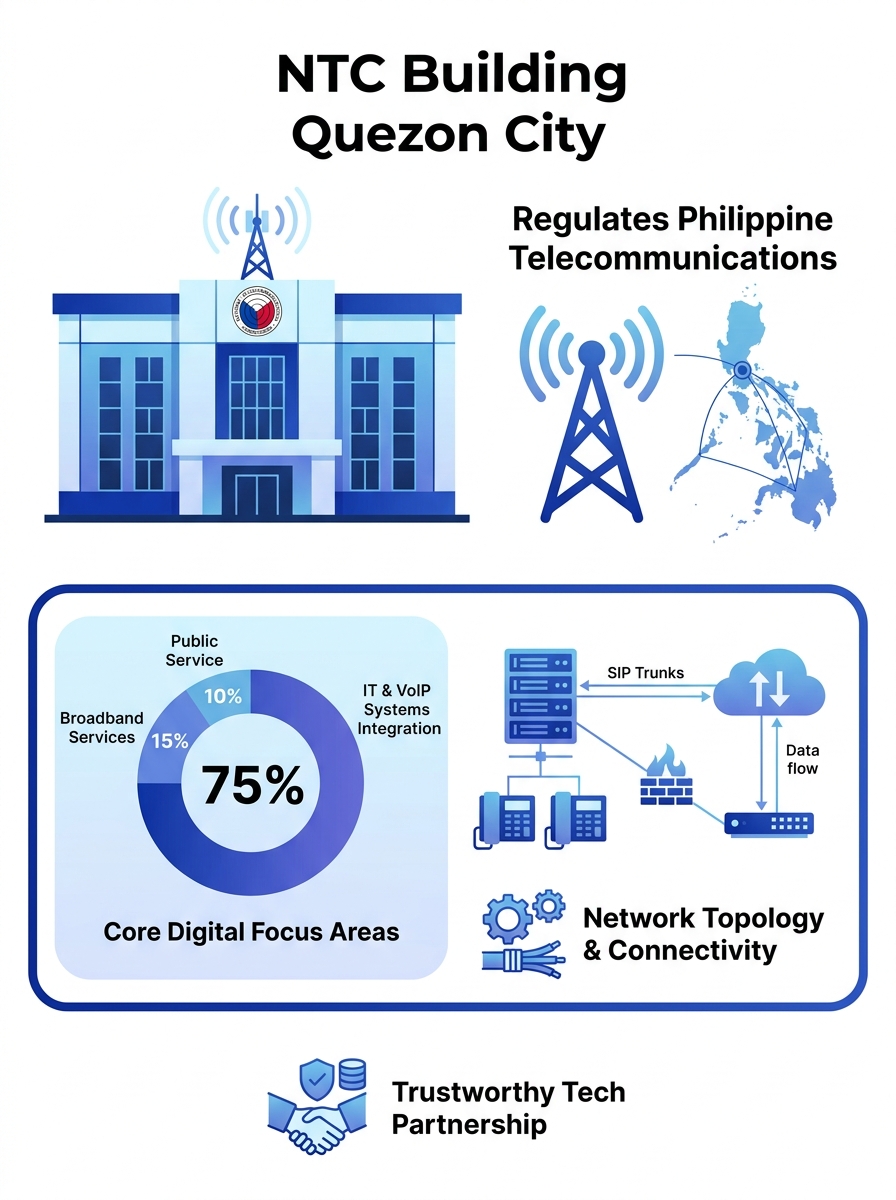
The NTC issued show-cause orders imposing ₱100,000 daily fines on Globe Telecom, Smart Communications, and DITO Telecommunity starting September 25, 2026, over alleged mobile internet service failures in Metro Manila. PCTO argues operators received fines upon receipt of the orders, before they could respond to or contest the commission’s findings.
Due Process Concerns Over Fine Implementation
“Fines were imposed upon receipt of the Show Cause Orders, before operators were given adequate notice and a meaningful opportunity to be heard, respond to, and contest the NTC’s findings,” PCTO said in the statement. The industry group represents major telecommunications carriers operating in the Philippines.
The organization contends the regulator’s approach raises serious administrative due process questions. PCTO cited legal provisions that authorize NTC investigations without previous hearings, but said those powers “do not constitute a general exemption from administrative due process or a blanket authority to impose punitive penalties without notice and opportunity to be heard.”
Testing Methodology Disclosure Gap
PCTO said NTC has not disclosed the methodologies, metrics, parameters, and testing conditions used to determine the carriers’ alleged noncompliance with service standards. “Operators should not be penalized under standards that have not been clearly defined and consistently applied,” the group stated.
The chamber referenced Memorandum Circular No. 001-01-2026, which provides for annual performance audits of telecommunications operators. PCTO said detailed methodologies and testing parameters required under that circular have yet to be established by the commission.
The lack of transparent testing criteria creates uncertainty for network operators attempting to meet regulatory requirements, the group argued. Without clear benchmarks, carriers cannot accurately assess compliance or identify specific network segments requiring remediation.
Investment Impact Warnings
PCTO warned that regulatory uncertainty combined with substantial daily penalties could divert resources away from network expansion and service quality improvements. The ₱100,000 daily fines accumulate to ₱3 million monthly per operator, totaling ₱9 million across the three carriers if sustained.
“Regulatory uncertainty and substantial penalties could affect resources otherwise intended for network expansion, improvement, and service-quality investments,” PCTO said. The industry group did not specify whether carriers have filed formal appeals or legal challenges to the NTC orders.
The NTC’s response to the concerns raised by PCTO was not available as of Wednesday evening, according to the source report. The commission has not issued public statements addressing the procedural objections or testing methodology questions.
Globe, Smart, and DITO have previously contested similar NTC enforcement actions tied to network performance standards. The September 25 fines followed months of regulatory scrutiny over mobile internet quality in the National Capital Region, where carrier performance scores have varied significantly in government monitoring reports.
What This Means for IT Managers
Enterprise IT leaders evaluating telecommunications vendor contracts should track how this regulatory dispute resolves, as it directly shapes service-level accountability mechanisms. The NTC’s approach to testing standards and enforcement procedures affects whether carriers face predictable compliance targets or shifting criteria that complicate capacity planning.
Organizations with multi-site operations in Metro Manila should review existing SLAs with Globe, Smart, and DITO to understand how regulatory penalties might influence network investment priorities. If daily fines persist, carriers may redirect capital away from enterprise infrastructure upgrades toward consumer segments measured in government audits.
The testing methodology gap PCTO identified also matters for IT procurement. If the regulator’s audit standards remain opaque, enterprise customers lack benchmarks to evaluate whether their carrier’s Metro Manila circuits meet the same quality thresholds NTC applies. Clarification of those metrics would help IT managers set realistic performance expectations and justify backup connectivity investments where primary links fall short of regulatory minimums.