
PLDT Inc. and Smart Communications are deploying Google Taara optical wireless links that transmit data using beams of light across islands and mountainous terrain, the telecommunications companies announced today, according to Telecompaper. The “Air Laser” technology bypasses traditional fiber infrastructure to reach geographically isolated communities in the Philippines.
The deployment represents a shift toward non-traditional connectivity approaches for underserved regions where conventional cable installation faces cost or terrain barriers. Google Taara uses free-space optical communication—lasers transmitting data through the air between two endpoints—to establish high-bandwidth links without physical cabling.
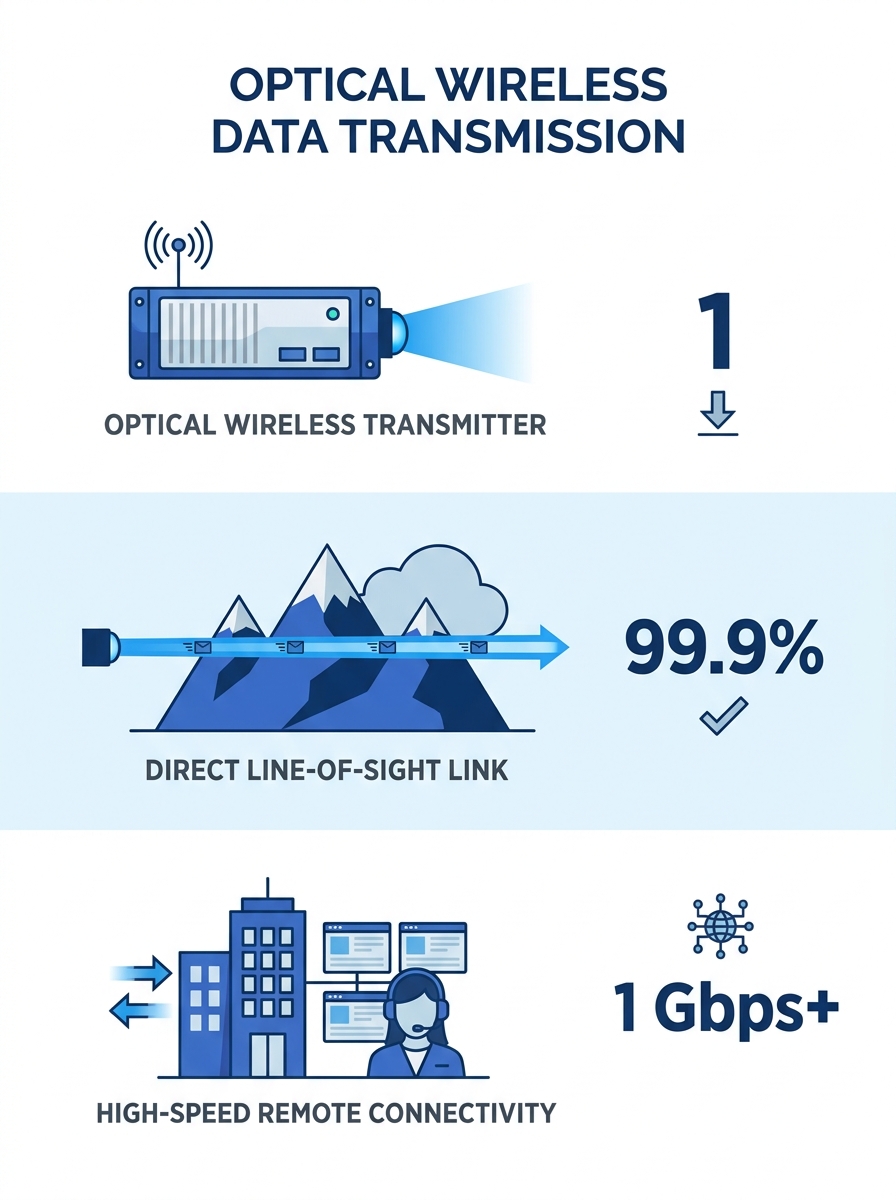
How the Technology Works
Free-space optical links operate similarly to fiber optic cables but transmit light through open air rather than glass strands. The Taara system directs narrow laser beams between terminal units mounted on towers or buildings, creating point-to-point connections capable of gigabit-per-second speeds. Google developed the technology to bridge “last-mile” gaps in areas where trenching fiber proves uneconomical or logistically impractical.
Weather conditions—particularly heavy rain, fog, or dense cloud cover—can degrade signal quality in optical wireless systems. The Philippines’ tropical climate presents operational challenges during monsoon season, when atmospheric water vapor scatters light and reduces link reliability. PLDT and Smart have not disclosed how they plan to mitigate weather-related outages or whether the deployment includes backup connectivity paths.
The companies described the initiative as a test of multiple non-traditional technologies aimed at reducing dependency on conventional telco infrastructure. Beyond optical wireless, the announcement did not specify other technologies under evaluation.
Strategic Context for Philippine Connectivity
PLDT’s Air Laser deployment follows the company’s broader rural connectivity push. In late April 2026, PLDT announced it would deploy internet infrastructure to over 3,500 sites in geographically isolated and disadvantaged areas through partnerships with three national government agencies. That program focuses on traditional fiber and wireless solutions.
Optical wireless fills a specific niche: locations where fiber installation costs exceed revenue potential and where microwave or satellite bandwidth proves insufficient. Philippine archipelagic geography—more than 7,600 islands separated by water channels and bisected by mountain ranges—creates natural use cases for line-of-sight laser links. Short island-to-island hops or valley-spanning connections avoid submarine cable costs or terrestrial trenching permits.
The technology also addresses resilience concerns for enterprise telecom infrastructure. Organizations operating across multiple islands currently rely on submarine fiber or microwave backhaul. A weather event or cable fault can isolate remote offices for days. Optical wireless adds a redundant path that shares no physical infrastructure with fiber routes.
Deployment Timeline and Scale
PLDT and Smart did not disclose how many Taara links they plan to install, which communities will receive initial service, or when commercial operations will begin. The announcement characterized the effort as ongoing testing rather than full-scale deployment.
Google Taara has been deployed in limited markets including Kenya and India since 2020. The system evolved from Google’s Project Loon balloon-based internet initiative, reusing optical communication hardware originally designed for balloon-to-balloon links. Philippine regulators have not published specific licensing frameworks for free-space optical systems, which occupy spectrum bands governed by different rules than radio-frequency wireless.
The companies’ focus on “reducing reliance on conventional telco infrastructure” suggests cost pressures in extending service to low-population-density areas. PLDT reported 2025 revenues of PHP 245.5 billion but faces margin compression as it expands into markets with lower average revenue per user. Non-traditional technologies that cut capital expenditure per subscriber become strategically valuable when traditional ROI models fail.
Reading Between the Lines
PLDT’s willingness to deploy optical wireless signals a pragmatic admission: fiber will not reach every Philippine municipality within reasonable investment horizons. The company is betting that point-to-point laser links can deliver acceptable performance at lower cost than trenching cable through rice paddies or negotiating submarine permits for short inter-island hops. The physics work—free-space optics routinely achieves multi-gigabit throughput—but operations teams will need to manage a technology stack unfamiliar to traditional telco technicians.
For IT leaders at Philippine enterprises with distributed operations, this deployment validates optical wireless as a production-grade option rather than an experimental curiosity. Organizations evaluating resilient infrastructure for branch offices in Mindanao or the Visayas now have a proof point that a Tier 1 operator considers the technology viable. The catch: PLDT has not published availability SLAs or weather-degradation statistics, making it difficult to assess whether optical links meet enterprise uptime requirements.
The larger strategic question is whether Google Taara represents a stopgap for areas awaiting eventual fiber buildout or a permanent alternative architecture. If PLDT treats this as temporary infrastructure, equipment lifespans and upgrade paths matter less. If Air Laser links become permanent backhaul for entire municipalities, the company will need to build maintenance expertise and spare parts supply chains for technology most Philippine field techs have never touched.