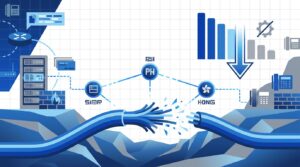
RJ PRO Tech Group, a California-based managed services provider, published a business continuity planning framework on August 23, 2026, that separates backup capability from operational continuity planning, according to the company’s technical blog. The four-component model addresses risk assessment, data protection, disaster recovery technology, and testing protocols for small and medium-sized businesses evaluating resilience strategies.
TL;DR: RJ PRO Tech Group released a business continuity framework distinguishing backup from broader continuity planning, targeting SMBs that conflate data recovery with operational resilience during outages or cyberattacks.
The guidance defines business continuity as answering operational questions—employee workflow during outages, decision authority, system restoration priority, and alternate-site operations—rather than solely addressing data restoration capabilities that backup solutions provide. The framework applies differentiated recovery standards to organizations based on sector-specific dependencies, citing engineering firms requiring project files and estimating software within hours versus dental practices prioritizing practice-management systems and compliance-sensitive patient records.
Downtime Economics Drive Planning Distinction
The published framework positions downtime costs beyond direct revenue interruption, citing disrupted employee productivity, client trust erosion, and decision-making under incomplete information as secondary impacts. Ransomware scenarios receive specific attention within the guidance, with encrypted files, operational disruption, and exposure threats identified as risks that untested backup strategies may not adequately address if backup systems are incomplete, inaccessible, or compromised during attacks.
Philippine enterprises face parallel continuity challenges across verticals, with BPO call centers requiring immediate access to customer relationship management platforms and telephony systems, while government agencies prioritize disaster recovery planning for communication systems under regulatory mandates including Executive Order 119’s territorial data storage requirements. The distinction between backup and continuity becomes acute during prolonged outages affecting Metro Manila operations, where traffic disruption or power instability can prevent physical office access even when data remains recoverable.
Four-Component Model Structures Recovery Capabilities
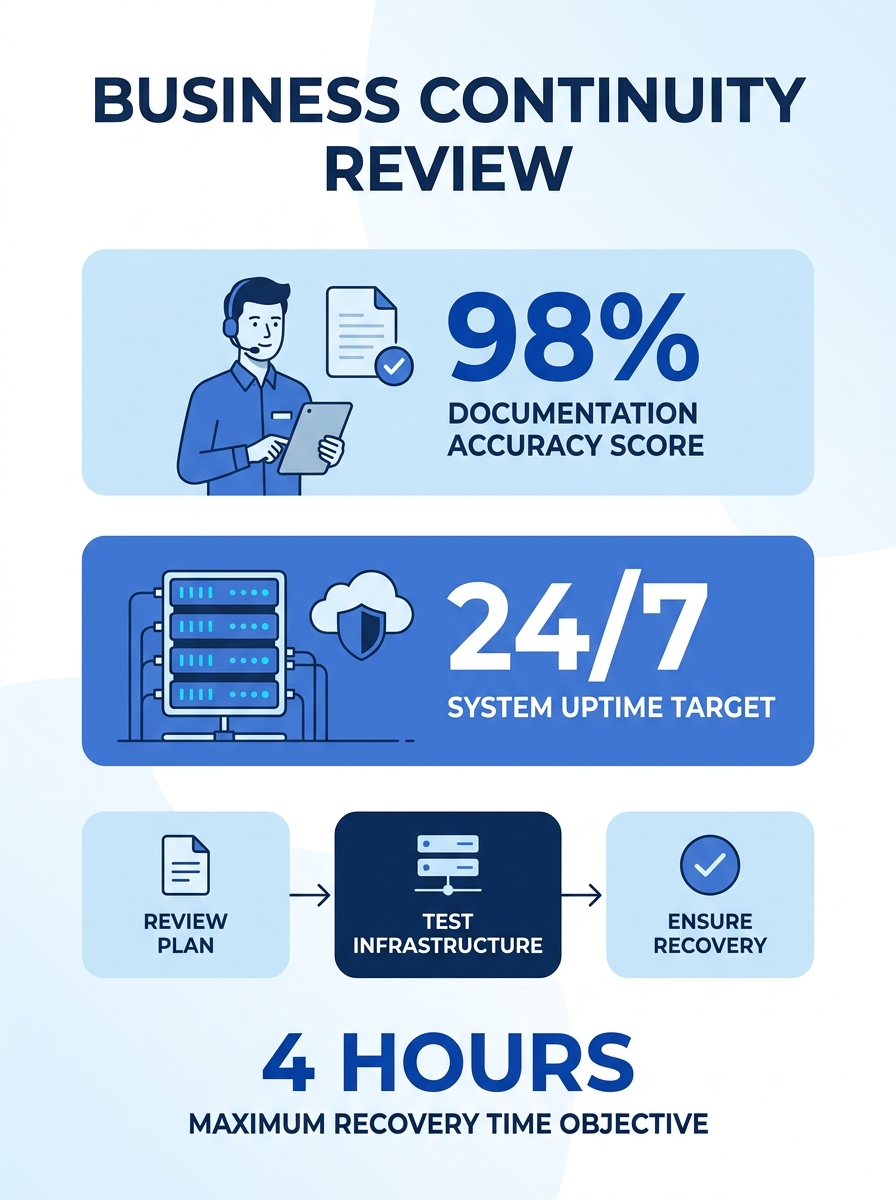
The framework structures continuity planning around four interconnected capabilities that the guidance presents as necessary for pressure-situation execution by leadership teams.
Risk assessment and recovery priority mapping identify systems, data sources, vendor dependencies, and business functions causing maximum disruption when unavailable. The model requires organizations to establish recovery time objectives—the speed at which systems must be restored—and recovery point objectives defining acceptable recent data loss, with transaction-processing environments requiring more frequent protection than offices updating records once daily.
Protected and recoverable data capability mandates automated backups with secure offsite or cloud copies, with backup frequency calibrated to information-change rates. The guidance positions image-based backups, virtual server recovery, replacement device procedures, and documented application configurations as disaster recovery technology components enabling critical system restoration to working hardware, cloud environments, or approved alternate locations.
Communication and testing protocols close the model, defining stakeholder contact procedures during outages and requiring regular recovery-procedure testing. The framework characterizes untested plans as assumptions rather than dependable operating procedures, a position aligned with enterprise backup strategies that Philippine organizations increasingly adopt following ransomware campaigns targeting backup infrastructure.
Critical-System Classification Drives Recovery Timelines
The guidance separates critical systems affecting revenue, safety, compliance, client service, or daily operations from convenient systems that can be restored later without placing businesses in serious positions. Recovery timeline variation across organizations means secondary internal applications may tolerate day-long outages while email, shared files, and customer information require near-immediate access, with manufacturers prioritizing production systems, supplier communications, and inventory data differently than service firms.
Philippine financial institutions applying this framework must balance network security solutions with continuity requirements under Bangko Sentral ng Pilipinas oversight, while healthcare providers prioritize protected health information access during outages affecting hospital information systems or clinic practice-management platforms. The framework’s sector-agnostic structure requires local adaptation to Philippine regulatory contexts including NTC telecommunications resilience standards and DICT critical infrastructure guidelines.
Implementation Gaps Between Backup and Operational Readiness
The published framework implicitly addresses a planning gap where organizations equate backup volume with resilience, a misconception that ransomware targeting backup systems has exposed across industries. Recent data showing ransomware targeting backups in 90 percent of attacks reinforces the guidance’s position that recovery readiness—not backup existence—determines organizational resilience during security incidents.
Philippine enterprises deploying unified communications platforms face continuity planning complexity beyond data backup, requiring documented failover procedures for voice systems, contact center operations, and collaboration tools that employees depend on for client interaction. The framework’s communication and testing components address operational continuity for telephony-dependent businesses including hospitality, healthcare, and professional services where call handling interruptions directly affect revenue and client satisfaction.
Manufacturing and logistics operations in Cavite, Laguna, and Pampanga industrial zones apply similar continuity distinctions to operational technology environments, where production system downtime costs extend beyond direct revenue loss into supply chain disruption, contractual penalties, and customer relationship damage—consequences that industrial businesses experience at 80 percent rates over three-year periods according to prior industry research.
Why This Matters Now
Philippine businesses evaluating resilience strategies confront a persistent confusion between backup capability and operational continuity that the published framework directly addresses. As data center expansion accelerates and cloud adoption increases across Metro Manila, Cebu, and Davao business districts, organizations mistake vendor-provided backup features for comprehensive continuity planning—a gap that becomes visible during actual outages when recovery procedures prove untested or incomplete.
The four-component model’s emphasis on testing aligns with emerging best practices as enterprises recognize that documented procedures without validation offer false security during pressure situations requiring rapid system restoration. For C-suite executives and operations leads managing distributed teams across Philippine islands, the distinction between recovering data and maintaining operational capability determines whether technology failures escalate into business crises affecting payroll processing, client deliverables, and regulatory compliance.
The framework’s publication timing coincides with rising cyberattack sophistication targeting Philippine enterprises, where ransomware operators increasingly compromise backup systems alongside production environments. Organizations implementing 5 business continuity strategies that separate backup infrastructure from disaster recovery orchestration demonstrate measurably shorter restoration times during security incidents—a performance differential that translates directly to preserved revenue, maintained client relationships, and reduced operational disruption costs during the growing threat landscape facing Philippine business infrastructure.